As more and more businesses around the Pacific Northwest are resuming in-person operations (with some limited restrictions, of course), the importance of making sure your premises is clean and disinfected in light of reducing the spread of this virus is crucial. Yes, you could let your regular janitorial or cleaning service handle it, or perhaps you’ve considered doing it yourself. But there are some very good reasons why the best idea is to work with a professional biohazard mediation and cleanup company like ours.
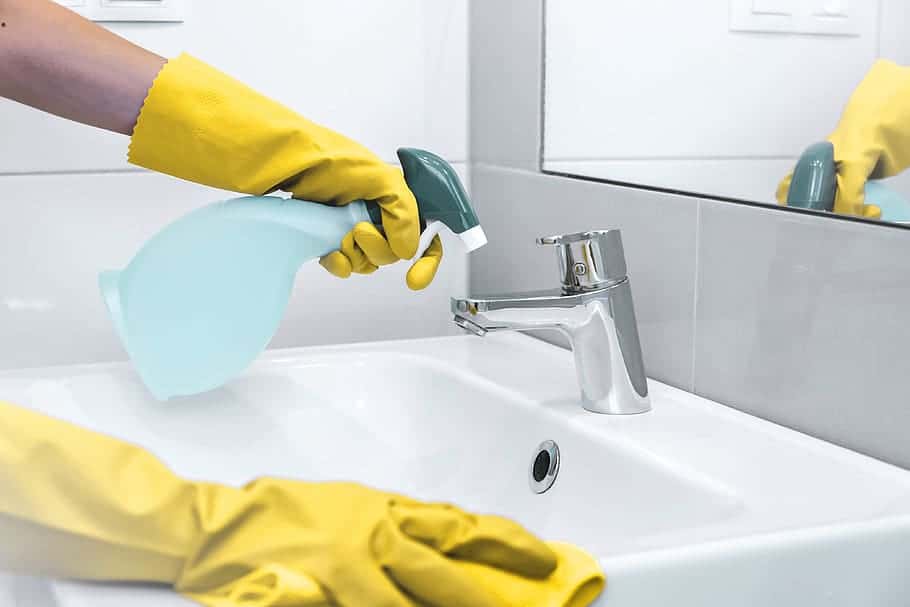
A regular janitorial service may not have this particular type of training. And while no doubt they’ve educated themselves on the particular required or recommended protocols, they most likely lack the experience. This is, after all, a newly emerged disease. But a biohazard remediation company like MedTech has been working in this industry for awhile, and there are certain procedures common decontaminating and sanitizing from ANY infectious organism.
As a business owner, your health and safety is crucial to the operation of your business as well as the livelihood of your employees. And chances are, you’ve got quite a bit of other things to do to get your business up and running again. Plus, the same reasons apply as the point above; in all likelihood you aren’t trained to do this properly. You may not even be aware of all the requirements. Yes, getting areas sanitized effectively is important, but so is doing it with the safety of the cleaning person in mind.
We understand that the desire to be able to get people back to work is strong, and we support that. But bringing in your employees to do COVID-19 cleaning is NOT a good idea. You risk the liability you’d assume if they got exposed. You need those employees for the jobs you hired them to do, and this type of work is likely not it!
So, if it’s time to get your place of business back in operation, and you need COVID-19 cleanup, disinfecting, and sanitizing to do that, give us a call. We are a trained biohazard remediation company serving the greater Seattle and Spokane areas, as well as other locations around the nearby Pacific Northwest. Professional cleanup from this virus, that meets or exceeds CDC and EPA standards, is just one of our services.
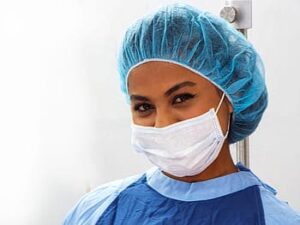 There are several types of face masks the general public is using, but in this particular article we’re going to cover the disposable ones most people are familiar with. These include surgical masks as well as the N95 masks worn both by health care professionals as well as other industries such as painters. The woman shown at right is wearing a surgical mask. The photo below shows an assortment of industrial N95 masks and respirators. (Please note: until very recently industrial grade N95 masks were not approved for health care workers; this restriction was lifted due to the short supply of medical-grade protective masks.)
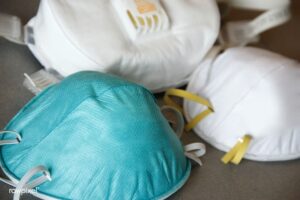 The first thing you should be aware of is that the CDC DOES NOT recommend the public purchase and use the surgical grade masks or N95 masks (unless you have been directed otherwise by your health care professional) due to these masks being in limited supply and sorely needed by health care workers and first responders. Still, you may see individuals out in public with either of these types of masks.
 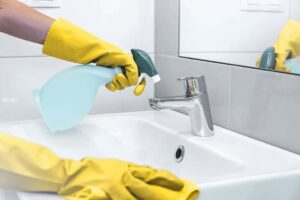 With the empty shelves at stores everywhere – a shortage of toilet paper, hand sanitizers, hand soap, and disinfectant cleaners, people are understandably concerned about protecting themselves from the spread of COVID-19. We’ve seen lots of reports and social media posts showing people using disinfectant cleaning wipes (most of them improperly). Here is some basic information on cleaning and disinfecting that is generally applicable to any infectious agent.
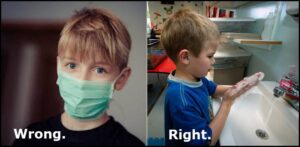 Sure, it may have been annoying the way your mom made you wash your hands so much as you were growing up. Wash after going to the bathroom, wash your hands before you eat, wash your hands after playing outside. Wash, wash, wash. And water as hot as you could stand it and plenty of soap were required. With the recent outbreak of the COVID-19 coronavirus and near panic worldwide, the focus on how to protect against an infectious disease is at the top of the list for conversations on social media, news programs, and more.